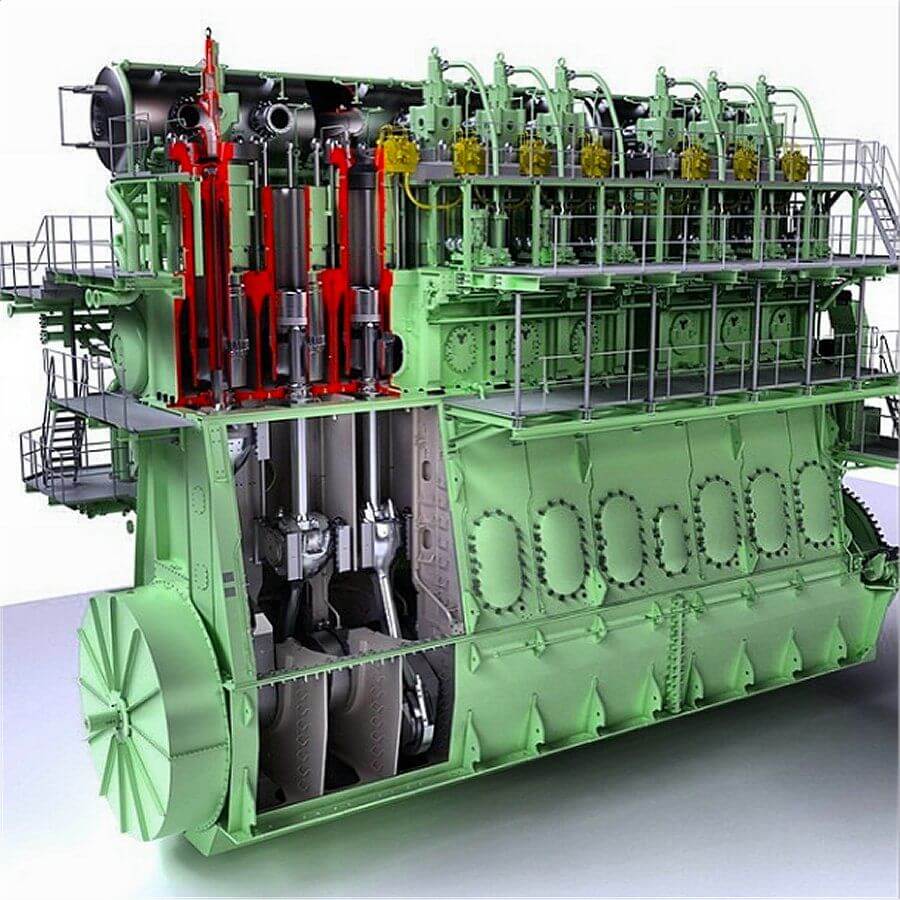
In the search to improve efficiency and lower emissions, ship engines have become increasingly more complex. To help solve this issue, this project aims to develop a digital-twin for the various 2-stroke engines designed by Everllence. The goal is to create a tool to support the various step in the engine production process, as well as improve operational performance. This PhD seeks to leverage Everllence’s strong knowledge in engine design and LSP’s expertise in large scale digital-twin technology.
When designed, an extensive list of parameters defining the engine control system must be adjusted and refined. This is often done using expensive and time-consuming testbeds. A robust digital-twin of the engine stands to alleviate this issue by proposing a set of numerically-defined accurate parameters. Moreover, a digital-twin of an engine currently in operation in a ship stands as a great asset in supporting remote maintenance or engine monitoring.
This project is key in bringing innovation and value-adding technology in a deeply competitive market. It stands at the crossroad of many disciplines, including but not limited to physics based simulation, digital-twin, control-theory, mechanics, engine theory and more.